Curtain styles: 11 options and how to choose for a window
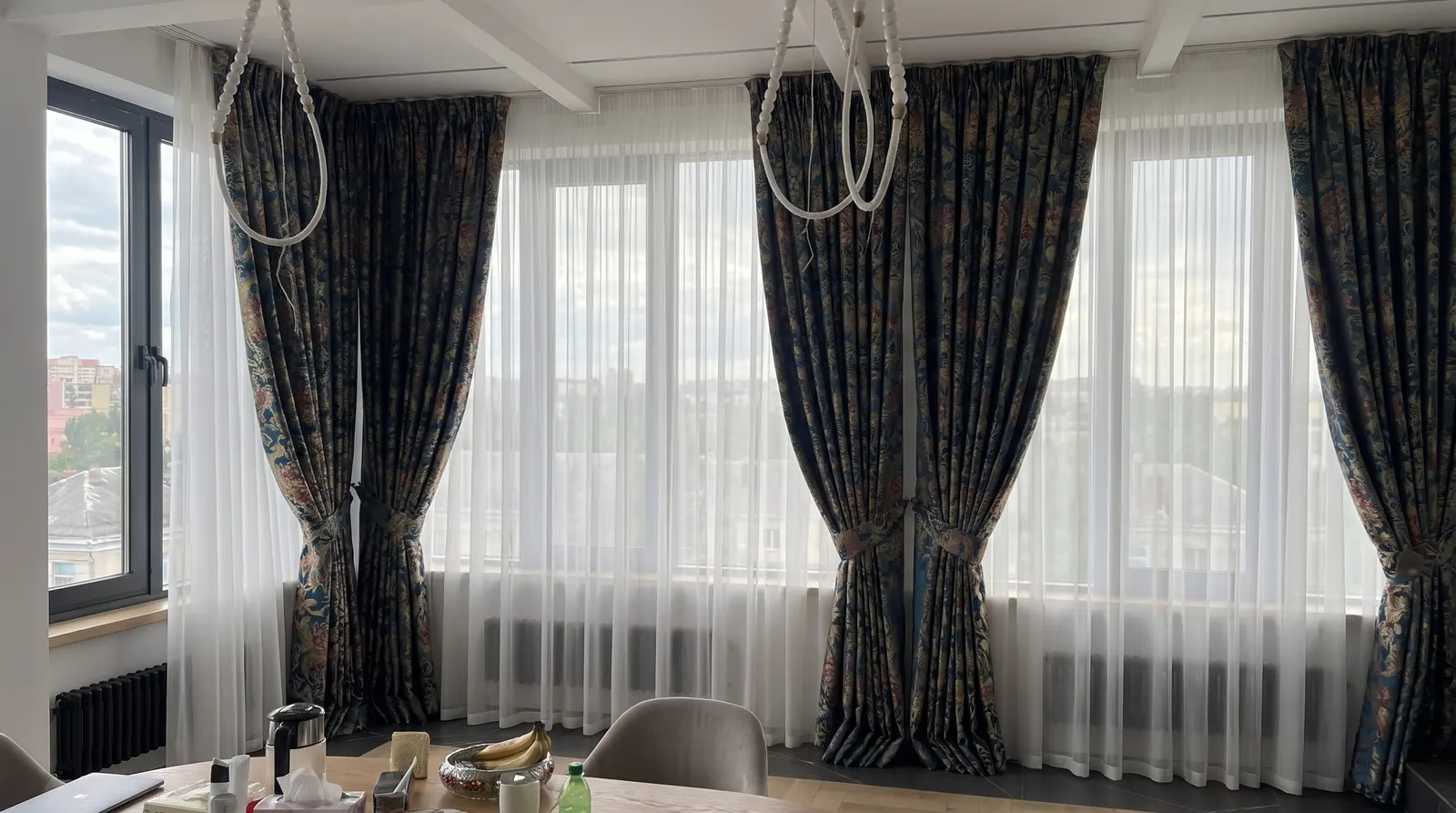
The same fabric in different styles makes very different rooms. Straight drapes look tailored, tiebacks feel softer, and a roman blind frees up the sill. Below are the 11 styles CurtainBot works with, and some guidance on choosing one together with your client.
Three questions before choosing
- What is the interior like? Modern, pared-back rooms suit straight lines and hidden tracks; classic interiors suit tiebacks, fold-over tops and decorative trims.
- What should the curtains do? Darken a bedroom, soften the light in a living room, or simply give privacy. That decides between heavy drapes, a sheer or a lifting blind.
- What are the window and ceiling like? A high ceiling benefits from curtains hung from the very top, a narrow window from a single side drape, a kitchen from a roman blind.
Classic drapes and sheers
Straight drapes, no tiebacks. Drapes hang freely to the floor with a sheer in the middle. The most versatile option, and it shows off a fabric’s pattern well.
Sheer and drapes in two layers. A full-width sheer under drapes held aside. Bright during the day, fully closed in the evening.
Drapes with holdbacks. Drapes held aside by decorative holdbacks. Soft folds that suit classic interiors.
Light and asymmetric
Sheer with one side drape. A full-width sheer and a single drape on one side. Useful when the window is next to a wall or furniture stands on one side.
Evenly pleated sheer. Sheer in even pleats with a drape at the side. A neat, modern option for living rooms and studies.
When the rod is part of the look
Curtains on a hidden track. Dense gathers from the ceiling with no visible rod. It makes the ceiling look higher and suits minimalist interiors.
Curtains on rings and a round rod. Rings on a tubular rod with finials. The rod becomes a design detail, which suits loft and Scandinavian interiors.
Details that make curtains special
Drapes with a fold-over top. The top folds over like a valance, with tiebacks at the sides. A good way to show the reverse side of a fabric.
Drapes with a contrast band. A wide band in a deeper shade along the hem. It grounds the curtains and draws the eye to the floor.
Drapes with decorative trim. A braid trim along the inner edge. A subtle accent that ties the curtains to cushions or upholstery.
Roman blinds and combinations
Roman blind. A lifting panel with even folds and no drapes. Suits kitchens, children’s rooms and windows where the sill is in use.
Styles can be combined. After you choose a style, CurtainBot asks what else goes on the window: keep it as in the style, drapes only, or add a sheer, a roman blind or a day-night roller blind. A sheer and a roman blind can take a second fabric, which makes it easy to show the client a full set.
Matching the style to the fabric
Choose a style together with the fabric, not separately.
- Heavy fabrics such as velvet, blackout or jacquard fall well in straight vertical folds, so they suit straight drapes, a hidden track or rings.
- Light linen and cotton hold a soft wave and look best with tiebacks, holdbacks or a fold-over top.
- A large pattern is best shown in straight drapes; tiebacks gather it into folds and hide it.
- A plain fabric comes alive with details: a contrast band along the hem or a trim along the edge.
Showing a client several styles
Make the first preview in a base style, such as straight drapes. Then use “change style”: the room and fabric stay the same and only the cut changes. Two or three pictures side by side help a client decide faster than any description. If the doubt is about the fabric rather than the style, use “change fabric”.
What about bay and attic windows?
A bay or an attic window isn’t a style, it’s a kind of window. CurtainBot recognises it from the photo and fits any chosen style to it: on a bay the curtains follow its angles, on an attic window they follow the slope.
When the style you need isn’t on the list
Choose “Your own example” and upload a photo of curtains the client likes. The service takes the style from the photo, not the fabric: the fabric stays yours.
For an accurate preview, photograph the window and fabric following a few simple rules.